

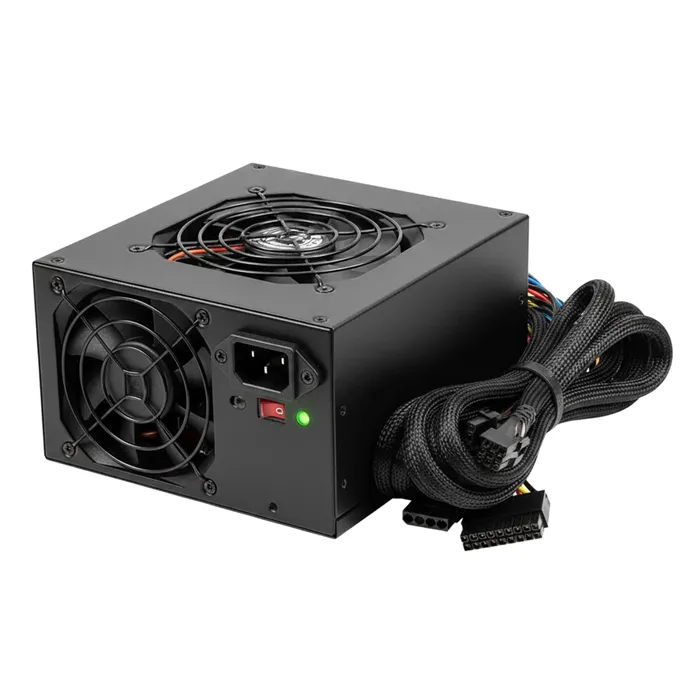
Desktop Power Supplies
● Call For Price
Refurbished
● Call For Price
Refurbished
● Call For Price
Refurbished
● Call For Price
Refurbished
● Call For Price
Refurbished
● Call For Price
Refurbished
● Call For Price
Refurbished
● Call For Price
Refurbished
● Call For Price
Refurbished
● Call For Price
Refurbished
● Call For Price
Refurbished
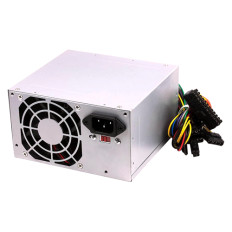
● Call For Price
Refurbished
Desktop Power Supplies
Desktop power supplies are responsible for delivering clean, stable power to every internal component of a desktop computer. From processors and graphics cards to storage drives and cooling systems, all components rely on the power supply to function correctly. A high-quality desktop power supply directly impacts system stability, performance consistency, and hardware lifespan.
Modern desktop systems vary widely in power requirements depending on their use case. Basic office desktops require modest wattage and simple configurations, while gaming and workstation systems demand higher output to support powerful CPUs, GPUs, and multiple peripherals. Desktop power supplies are available in a wide range of wattages, allowing users to choose a unit that matches their system’s needs without unnecessary overhead or inefficiency.
Form factor is an important consideration when selecting a desktop power supply. Standard ATX power supplies are commonly used in mid and full tower cases, while smaller SFX and compact designs support small form factor builds. Selecting the correct size ensures proper fit, airflow, and cable routing inside the case. Modular and semi-modular designs further improve airflow by allowing users to connect only the cables they need.
Efficiency and power regulation are key performance indicators for desktop power supplies. High efficiency units convert more input power into usable output, reducing wasted energy and heat. This leads to quieter operation and lower electricity costs over time. Built-in voltage regulation ensures that sensitive components receive consistent power, protecting against instability and unexpected shutdowns.
Protection features are essential for safeguarding desktop systems. Quality power supplies include protection against overvoltage, undervoltage, short circuits, and overheating. These safeguards help prevent damage during power surges or electrical faults, which is especially important in environments with inconsistent power quality. A reliable power supply acts as a protective barrier between your system and external electrical issues.
Noise levels also matter, particularly in office and home environments. Desktop power supplies are designed with optimized cooling solutions to balance airflow and acoustic performance. Advanced fan control systems adjust fan speeds based on load, keeping systems quiet during low-demand tasks while providing sufficient cooling under heavier workloads.
At GoToDirect, we offer desktop power supplies suitable for business desktops, custom builds, and performance-focused systems. Our selection includes reliable replacement units as well as options for upgrades and new builds. With clear specifications and trusted quality, our desktop power supplies help ensure stable operation, long-term reliability, and peace of mind for users at every level.
FAQ's
What wattage power supply do I need for my desktop computer?
Wattage requirements depend on system components. Basic office systems typically need lower wattage, while gaming or workstation PCs require higher output to support graphics cards and processors. It is best to calculate the total component power draw and add a safety margin.
What is the difference between modular and non-modular power supplies?
Modular power supplies allow you to connect only the cables you need, improving airflow and cable management. Non-modular power supplies have all cables permanently attached, which can create clutter but are often more affordable.
Why is power supply efficiency important?
Higher efficiency power supplies waste less energy as heat. This results in lower electricity costs, quieter operation and improved system longevity due to reduced thermal stress.
Can a low-quality power supply damage my computer?
Yes, unstable or poorly regulated power can cause system crashes, data loss or permanent damage to components. A reliable power supply protects your system from electrical issues.
What protection features should a desktop power supply have?
Quality power supplies include protection against overvoltage, undervoltage, short circuits, overheating and power surges. These features help prevent damage during electrical faults.
Does power supply size matter?
Yes, the physical size and form factor must match your computer case. Common form factors include ATX and SFX, and choosing the correct size ensures proper fit and airflow.